Becoming an AMTRA SQP - Summary
Download our guide to becoming an AMTRA SQP:
Become an AMTRA SQP - the process in summary
The standard process of becoming an AMTRA SQP is administratively straightforward but it does require a significant commitment in terms of learning. Simply follow the distinct stages set out below:
1. Enrol with AMTRA
Complete the online enrolment form or a paper form to print and return with the Appropriate Fee. We'll send you a Training Manual for you to study.
Optionally, book on a supportive training course
If you wish, you can also book on a supporting training course run by Harper Adams University, or by an independent provider. If you book a supportive training course, you must still enrol directly with AMTRA.
Most people use the training manual from AMTRA, with support from their employer, but for those who don't have that employer support, or who want a bit of extra help, we recommend a training course as additional support in the learning journey.
Alternative routes
For those who already have academic qualifications to support being an SQP (including CALC students and those looking to join AMTRA from another SQP registration body) please contact AMTRA to discuss the process.
2. Book an exam
Send us the exam booking form, and then sit the exam – good luck! If you book a training or revision course, you must still book the exam itself directly with AMTRA.
3. Wait for your results
Your results can take up to 7 weeks after the exam. If you pass the necessary modules you will become an AMTRA SQP, with the obligations and duties that entails.
That's it! The process in its essentials is simple, but please read the details.
Becoming an AMTRA SQP - 1. Introduction
The term Suitably Qualified Person, or SQP, is an important role defined in the Veterinary Medicines Regulations: AMTRA prefers to describe such people, particularly when talking to animal owners about the role, as animal medicines advisors, or sometimes registered animal medicines advisors (RAMAs) – it describes the role much better than SQP.
We hope in due course that the term may be changed in the Regulations: in the meantime, treat SQP and (registered) animal medicines advisor/RAMA as equivalent.
SQPs have an important and responsible role, contributing to animal health and, in the case of farm livestock, farm profitability. They are entitled to prescribe and/or supply certain veterinary medicines under the Veterinary Medicines Regulations, but to do so must act professionally including following the rules of the Regulations and of an associated Code of Practice.
AMTRA SQPs work in a variety of work environments – typically in veterinary practices, in agricultural or equine businesses, or in pet shops, but we have SQPs working for pharmaceutical companies, government, universities, charities, zoos, laboratories, the army and less obvious places. They can deal with customers face-to-face or via the telephone or Internet, but the legal and professional obligations remain the same.
Becoming an AMTRA SQP requires passing exams, but that is not the end of the process: being an AMTRA SQP means an ongoing commitment, acting responsibly, following the rules in the Regulations and Code of Practice, advising animal owners on choice of medicine and their safe and effective use, as well as other strategies, contributing to the health and welfare of their animals. There is also a requirement to do some ongoing learning known as CPD (continuing professional development) and to pay an annual fee to remain on the AMTRA Register of SQPs.
AMTRA SQPs are subject to disciplinary processes where we have reports of alleged noncompliance with the rules, and if found in breach can have action ranging from a letter of guidance through to permanent removal from the register of SQPs.
Some people working towards becoming an AMTRA SQP participate in an external training course provided by a third party, which could be face-to-face or online. Others get support from their employer, and some study solely from the AMTRA training material – the printed manual and online (available via the Harper Adams Virtual Learning Environment / VLE). Everything you need should be in the information from AMTRA. Most people find external training support very helpful but it is supplementary and not required – the decision is yours.
Whatever learning route you take, it is important that you have enrolled as a student SQP with AMTRA, and that when ready you book your exams with AMTRA – booking a training course with an external provider is not the same as either of these steps.
What you need to pass to become an AMTRA SQP
Most candidates are assessed separately in the Base Module together with whichever species modules you have chosen:
- The Farm Animal Module
- The Equine Module
- The Companion Animal Module
- The Avian Module
To become an AMTRA SQP you must pass the Base module, and at least one species module.
Alternatively, Registered Veterinary Nurses are required to take just one exam:- The Veterinary Nurse module
The Veterinary Nurse module effectively replaces the standard Base and Companion Animal modules, but RVNs may also enrol for the Farm Animal, Equine, or Avian modules if appropriate to their needs.
 |
If you pass one or more AMTRA modules but fail overall to qualify as an SQP, then any "pass" in the modules will cease to be considered valid after 24 months if you don’t qualify in the meantime, and these would then have to be re-sat at the normal re-sit cost. |
Becoming an AMTRA SQP - 2. How to book your AMTRA exam(s)
A list of forthcoming exam dates is available on the AMTRA website. Most exams are carried out online: for most people this means sitting the exams at home or work or some other quiet place. In all cases the location must be able to support exam conditions including without being disturbed.
However, from time to time we do offer exams hosted at Harper Adams University (in Shropshire), with one of two formats: either online but where the computer equipment is provided and configured for you, so you only need to turn up at the booked time, or with traditional pen and paper.
The current version of the exam booking form can be downloaded from the AMTRA website (form reference A03).
 |
Booking a place on a training or revision course is NOT the same as booking a place at the exam. You must always send AMTRA an exam booking form if you intend to sit the exam, regardless of where you are planning to take the exam (or whether you've separately booked a training or revision course). |
 |
Exams must be booked with AMTRA by the deadline date shown on our website, normally noon on the Friday that is 4 weeks before the batch of exams begins. . |
 |
AMTRA will acknowledge receipt of your exam booking form by email. If you do not receive this within a week of submitting your exam form (or less if you are submitting very close to the booking deadline), please telephone AMTRA. |
 |
Your first exam attempt must be taken within 24 months of enrolling with AMTRA, or you may pay a fee to extend this by a further 12 months. You must have enrolled with AMTRA first before booking your exam – booking a training course is not the same as booking the exam with AMTRA . |
We do not anticipate any exams becoming full but may close these to bookings in exceptional circumstances. AMTRA and Harper Adams will make reasonable efforts to hold all exams, but reserve the right to cancel an exam at their sole discretion.
Your enrolment fee includes your fees for your first attempt, provided you attempt them all in a single batch (a single week). A "separate sittings fee" will be charged if you choose to take your initial AMTRA modules (i.e. those for which you initially enrol) spread over more than week. Additional re-sit fees are charged for second and subsequent attempts.
This may be managed for you if you work for a larger employer – check with them if in doubt.
-
Go to the AMTRA website and check what dates are available. [Go toamtra.org.uk/ExamGrp/Exams
or on the "Candidates" menu
select "Exam Dates".]
Make sure you are aware of the exam format for the exam block you're looking at – most AMTRA/Harper Adams exams are done online at home or work, but we highlight on our website a few which are done on campus at Harper Adams University (either on Harper Adams computers or with pen-and-paper).
-
On the AMTRA website, download the latest version of the exam booking form. [Go to amtra.org.uk/Forms or
on the "Candidates" menu select "AMTRA Forms to Download".]
-
Make sure on the form you have selected all of the modules you want to book for.
Make sure you enter the actual date of each individual exam module you have chosen (and not the range for the week).
Do not select "Avian" if you are enrolled to take the Farm module.
-
Check whether you need to pay a fee along with the exam booking. If so, make sure to include card details (or a cheque) with your form.
The exam booking form (and the fees listed) changes from time to time – always use the current version on our website. Forms returned with the wrong fee will be rejected and may miss the exam booking deadline.
- Send the form to us by email ([email protected]) or in the post.
Becoming an AMTRA SQP - 3. Photo ID
Please note that you must have an approved form of photo ID: you will be required to present this during your online student enrolment with Harper Adams University. A UK CitizenCard is available to anyone – if you don’t have one of our approved items. If you are taking an exam at Harper Adams University in person (as opposed to online at home/work) you will need to take it there for inspection.
Without such ID your results will not be processed, and you cannot gain entry to the AMTRA Register.
If you do not have one of the following forms of approved ID, please address the issue NOW – do not wait until the exam. If you don’t have one of our approved items, get a CitizenCard at www.citizencard.com
The only acceptable photo ID is one of the following (which must not be expired at the time of the exam):
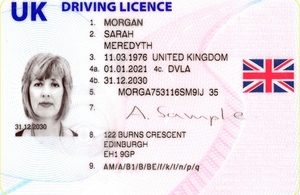
Photocard of UK/EEA driving licence

Passport

UK CitizenCard
Becoming an AMTRA SQP - 4. AMTRA Exams
Online AMTRA exams
Specific provisions relating to the online AMTRA exams are set out in the document Instructions and Information for Candidates, Employers and Trainers which should be studied when you are ready to sit your exams - this is on the AMTRA website and will be sent to you when you book your exams.
Most exams are carried out online: for most people this means sitting the exams at home or work or some other quiet place.
However, from time to time we do offer exams hosted at Harper Adams University (in Shropshire), with one of two formats: either online but where the computer equipment is provided and configured for you, so you only need to turn up at the booked time, or with traditional pen and paper.
If you don’t have access to a suitably equipped computer (including webcam and microphone), struggle with IT skills, don’t have a reliable Internet connection, or don’t have a suitable quiet place to sit the exam, we recommend you consider sitting the exam at Harper Adams University.
General guidance
The AMTRA exams are "closed-book" exams. The Compendium is not be permitted, nor any other material, other than that provided within the exam (which may include access to elements of the Compendium or other resources).
 |
Before sitting the AMTRA exams, please study this document which includes things you should know. |
 |
Zero marks are given to an entire answer if any part of the answer contains advice or actions not compatible with the law, the SQP Code of Practice, or with data sheet recommendations, or which may endanger the animal. This might include supplying a wormer contraindicated in pregnancy to a female animal without checking if it could be pregnant or even checking its sex, supplying a sheep wormer for use in goats, failing to address horse passport requirements, failing to consider restrictions on the sale of eggs from domestic flocks, failing to address specific requirements for sheep dips, or incorrect dose rates, or failing to record information that is required to be recorded. |
 |
There is no negative marking in any of the exam papers – it used to be the case that for some of the multiple-choice questions, an incorrect answer was awarded minus one mark: that is no longer the case. |
What might be in the exam
All AMTRA exams will have some "administration of product" questions. In addition, your ability may be tested to use SPCs. This may be, for example, assessing dose rates, withholding periods, contraindications and warnings or asking you to find a suitable product to match a defined scenario. There may be a range of "right answers" depending on the product you choose as your example.
Other questions test your ability to fully manage the perfect transaction following the SQP Code of Practice. Thus we are looking for evidence that what you propose to do in a particular case fulfils relevant parts of the Code – but note that access to the text of the Code itself will not be available in the exam. Such questions will be focused on implementation and understanding the role of the SQP in context, and not on knowledge recall – it is not testing remembering the precise text.
A statement that you would do this (for instance, "I would advise on warnings and contraindications") is not enough. The required information relating to the specific chosen product must be given, to ensure you are able to use the SPC to give the correct advice.
In thinking about how you might tackle longer-answer questions, depending on the question you might include:
- General advice specific to any question the “customer” may ask in the scenario. This may include information about specific parasites, human health risks, management methods to reduce risk e.g. hand washing and poop scooping etc.
- The questions that should be asked in order to gain enough information to make an appropriate product decision. (If you choose to do this in a question and answer way, this is fine, but a short explanation on why the question is relevant would gain more marks).
- An explanation of what the product you have chosen to recommend will, or will not do.
- Any relevant contra-indications and warnings relevant to the specific product you have chosen.
- Details of administration of the chosen product: dose, frequency and exactly HOW to administer the product.
- How to store the chosen product
- Disposal of remainder of product and packaging
- Best practice on record-keeping
- Information on epidemiology of specific parasites, management methods to reduce risk e.g. poo picking, use of quarantine dosing if applicable, use of FEC and the issues on wormer resistance, how to get animal weights
- For the Equine module: how to manage the requirements of horse passport status of animals
- For the Avian module: please note here the VMD restrictions on the use of small volume flubendazole products and their derivatives in birds that are for sale or producing products for sale
- For the Avian module: please also note poultry of food-producing species can NEVER be given SAES products whatever their individual purpose without veterinary prescription under the cascade
In the Equine paper, the essay question is separated into two parts, with part A focusing on customer advice, product recommendations, and the conversational aspects, and part B asking students to discuss their professional obligations under the Code of Practice. The two elements are separated to improve question clarity and optimise opportunities to succeed. For an example as to how the essay will look, see the practice exam on the Harper Adams VLE (see below).
If you work in a business where electronic systems automatically record certain information, or automatically prompt you with certain questions which must be answered, then you are still expected to know and understand the legal requirements for information to be obtained from the customer and for record keeping, and to be able to describe these in the exam. The electronic systems might fail one day, or you may work somewhere else with different system in future. Many of the responsibilities in the Veterinary Medicines Regulations fall on you, not an employer, and you should be able to demonstrate understanding of them and ability to comply.
Sample questions and answers / practice exams
Some sample questions and answers on which you can test yourself are included in the Harper Adams "Virtual Learning Environment" (VLE) to which you will have access once you've successfully completed the Harper Adams student enrolment process. (If you've not received details from Harper Adams about your student enrolment process within 5 days of getting confirmation of successful registration with AMTRA, please contact Harper Adams.)
AMTRA strongly encourages all candidates to make use of the sample exams within the VLE.
Note that the sample exams (use of which is strongly encouraged) is different from the Inspera Access Test (IAT) which, while presented as a mini-exam, is focussed on ensuring your computer equipment is correctly set up to take your full exam and that you know how the exam process works.
The IAT is compulsory and must be completed before each block of real exams. More details of that process are in the document Instructions and Information for Candidates, Employers and Trainers and will be provided again after you’ve booked your exam.
Use of the AMTRA Compendium in the exams
The Compendium is not permitted, nor any other material.
Access will be provided to a small subset of data sheets / SPCs (or extracts of them) where relevant to specific questions. The data sheets will be embedded into the software which hosts the exams. Candidates should continue to be familiar with what data sheets / SPCs look like and interpreting and using them, either from the book if they have access to a copy, or in future via the NOAH or VMD websites. This mirrors daily life, where it is entirely normal and reasonable to look up details about a specific medicine, and it is not expected that anyone will remember all the key details about every product.
However, understanding and implementing the SQP Code of Practice is an integral part of the role of being an SQP, and so questions based on the Code will be included in the Base and VN exams, and candidates should be able to answer them without needing to access the Compendium or the Code. Such questions will be focused on implementation and understanding the role of the SQP in context, and not on knowledge recall – it is not testing remembering the precise text.
The level 4 exams (Base, Companion, Avian, and VN) will contain a scenario section, in which various products will be discussed. SPCs will be provided for all relevant products.
The essays and case scenarios in the Farm Animal and Equine exams will include a short statement in the style of the following:
It is July, and it is your first day in a new store, working as a qualified equine SQP. A customer with a 16-year-old horse (in good condition) sharing grazing with two other horses, asks your advice. All three horses have recently had a faecal egg count carried out. The other two horses (different owner) had a zero result. Her horse had 400 eggs per gram.
The horses have been grazed together and given the same wormers for several years, but this is the first time they have had a faecal egg count. Your customer asks if you can explain the result and what she should do now and for the next 12 months regarding endoparasites.
Give appropriate advice.
If you recommend the use of any product, you must explain how and when to use or administer it, choose from the following and justify your choice.
The anthelmintic products in stock today include Equest Pramox, Strongid-P Paste, Nexmectin, Panacur Equine Guard 10%, and Noropraz. Give any other advice relevant to your SQP role.
The same style of adaptation will be applied to the Farm Animal exam.
Students will be presented with a range of realistic treatment options, just as they will be when working in industry. The products will vary in suitability. We recognise that there may be occasions when a student is presented with a product that they are not necessarily familiar with. As a registered professional, SQPs can work in a range of settings, which in turn will offer differing ranges of products. Successful students will be able to interpret the information on offer and apply it to the scenario. This is an essential skill at academic level 5.
Becoming an AMTRA SQP - 5. More about the exams
Separate sittings
For anyone who enrols as a candidate from 1 January 2026, a "separate sittings fee" will be charged if you choose to take your initial AMTRA modules (i.e. those for which you initially enrol) spread over more than one week. It costs AMTRA considerably more for those who choose this additional flexibility, and though the fee was suspended for a while, it will be in place again for new enrolments from that date.
Re-sits
If you fail an AMTRA exam, you may re-sit (for a fee). We will normally allow a maximum of four attempts.
If you are booking a re-sit, please ensure you send the fee with the exam booking form. (See also the full note on re-sits under "Your results".)
Withdrawal/cancellation (re-booking) fees
You must tell AMTRA at least 4 weeks in advance if you wish to withdraw from an exam, otherwise a withdrawal fee will be charged (payable at the time of re-booking). If you need to re-book multiple modules, then the fee is per exam block (week) when you come to re-book.
Before we introduced this fee, about 17% of SQP exam candidates withdrew from exams at short notice (within four weeks of the exam), or simply failed to turn up. This imposes significant administrative burdens on AMTRA and Harper Adams, and where exams fill up means that other candidates are turned away. Additionally, Harper Adams and thus AMTRA are charged by the IT company that hosts the online exams, regardless of whether you turn up.
Note that cancellation/withdrawal includes substituting one individual for another within the same company.
Although the fee is a cancellation/withdrawal fee, it is payable upon re-booking for each fresh block of exams.
Exceptional circumstances will be considered on a case-by-case basis but these should be exceptional – for instance, candidates should allow for traffic delays, and should have made suitable checks in advance of computer equipment. Applications for consideration of exceptional circumstances should be made in writing to the AMTRA Chief Executive.
Candidates with additional support needs
Do you have a disability or specific learning difficulty that could impact on your AMTRA SQP exams? Harper Adams are able to make reasonable adjustments for you, if you let them know in advance and certainly no later than six weeks before your exam, as they may not be able to assist you if they have less than six weeks' notice.
Assistance with the examinations, usually in the form of extra time, can only be given to candidates who produce written proof of requirement, e.g. full dyslexia documentation from an educational psychologist.
If you do not have any documentary evidence, you may take an online Dyslexia test.
qsdyslexiatest.com/quickscreen-dyslexia-test-for-individuals
The fee is paid on the website at the time of taking the test. You will register online, pay the fee and take the test. When you get the results, forward them to Harper Adams at [email protected]
Please help Harper Adams to assist you with the exams, by telling them a long time in advance of your requirements and any reasonable adjustments they can make to your learning experience.
Any disclosure you make will be between yourself and Harper Adams University. No details will be discussed with your employer or any third party.
Becoming an AMTRA SQP - 6. Your Results
|
It normally takes up to seven weeks for you to receive your AMTRA/Harper Adams exam results – please be patient. |
It's helpful to remember that you are taking a formal university exam leading to a Higher Education qualification with academic credits that can be used across the Higher Education world. Your exams have first to be marked, and in some cases second-marked, then referred to a Board meeting of Harper Adams University for them to be formally adopted. These meetings take place approximately monthly but can be at longer intervals. After the Board meeting, any queries need to be resolved, the results need to be signed off internally within Harper Adams, and then provided to AMTRA. We then need to process them and then write to you.
AMTRA and Harper Adams will write to you separately: AMTRA tells you about your professional status as an AMTRA SQP, and Harper Adams about your academic status.
AMTRA will advise you whether you have become an AMTRA SQP and if so which type (which will depend on which of the species modules you have passed). Harper Adams will write to you separately with your precise results in each module.
Although AMTRA and Harper Adams normally try to coordinate our communications, occasionally there may be a short gap. Please do not contact either Harper or AMTRA seeking any "missing" communication until a week after you’ve received the results from one of us.
 |
We will not give out results over the telephone – we will email you to tell you that your results are available on our website, and follow up with confirmation and your certificate (where appropriate) by post to your home address. |
- the Base module, and
- at least one species module (i.e. farm animal, equine, companion animal or avian)
Alternatively you must have passed the Veterinary Nurse module which is equivalent to passing the Base and Companion Animal modules (or you must have passed the relevant modules of the Veterinary Pharmacy Education Programme or Companion Animal Life Care).
If you failed one or more species module, but still satisfy the minimum requirements above, you will still be a SQP, but with a more restrictive classification. For instance, if you tried to become an all-species SQP but only passed the base and farm animal modules, you will be an farm-animal-only SQP, able to prescribe and supply for farm animals but not equines or companion animals.
Re-sits
If you failed some or all of the modules you may re-sit them a limited number of times on payment of the appropriate re-sit fee. It should be noted that the re-sit fees are higher than the equivalent fees included in the initial enrolment fee.
You may normally have a total of four attempts at each module.
To book a re-sit, please complete and return an exam booking form with the appropriate fee.
Becoming an AMTRA SQP - 7. After you have qualified
You will be included on the current calendar year’s AMTRA SQP Register – your inclusion is for the remainder of the year, not for a full 12 months. Since AMTRA operates on a year from January to December, then if you qualify in the summer you may only be on the Register for a couple of months before we start asking you for your fee for the following year (which we do in October).
 |
In order to continue as an AMTRA SQP, you must ensure AMTRA is paid the annual renewal fee each year. The renewal fee should be paid in October or November for the following calendar year. A late payment fee is due on payments received in December, and for payments received after 1 January a reinstatement fee is payable. |
Some employers manage the payment of the annual fee on your behalf, but do check with your employer to make sure that this is the case, as it's your responsibility to ensure the fee is paid to AMTRA.
You must act in a professional manner including acting in accordance with the Veterinary Medicines Regulations and the Code of Practice issued under them by the Secretary of State. If the Code changes in a way which changes the obligations of SQPs, AMTRA will provide an updated copy to all AMTRA SQPs.
 |
You must keep yourself up to date, including undertaking at least the minimum prescribed amount of Continuous Professional Development. It is important that you understand your CPD obligations once qualified: please read the document "Frequently asked questions about the AMTRA CPD scheme" which is sent when you qualify. |
Once qualified, please make sure you understand what your CPD obligation is and the deadline for achieving it.
Keep AMTRA updated
Even though most SQPs are supported by their employers, your qualification is personal to you, and AMTRA will write to you at your home address.
 |
Please remember the importance of keeping AMTRA advised of any change in personal details (such as name change, for which we will need sight of documentary evidence) or if you move house – please do not expect your employer to do this for you. You can login to the AMTRA website (amtra.org.uk/Identity/Account/Login) and update your contact details at any time. |
If you’ve provided an email address to us, then you will get extra information which we don’t always send in the post. If we have an email address for you, then we will rely on it from time to time, so please always make sure we have an up to date address for you, preferably a personal one which reaches you directly rather than a generic one for the store or practice.
Upgrades – adding extra modules
If your initial enrolment with AMTRA was for anything other than an all-species SQP, you may subsequently decide to add one or more of the other species modules to your qualification. (Note that this is more expensive than enrolling for all the modules at the start.)
Like the initial enrolment, this is essentially a two-stage administrative process:
- Enrol with AMTRA for the upgrade: Send us the application form (from the AMTRA website, reference A02) and fee. We'll send you the text of the additional modules for your training manual.
- Book the exam: Select an exam date from the list of exams on the website, and then send us your exam booking form (from the AMTRA website).
Premises registration
SQPs may only supply veterinary medicines for which they are qualified from registered premises – that is, a Veterinary Practice Premises (VPP) registered with the Royal College of Veterinary Surgeons (RCVS); a retail pharmacy registered with the General Pharmaceutical Council (GPhC) or the Pharmaceutical Society of Northern Ireland (PSNI); or, most commonly, premises authorised as SQP Retailers' premises by the Veterinary Medicines Directorate (VMD).
Please note that if you are setting up a new SQP Retailers' premises, you must apply directly to the VMD's Inspections & Investigations Team with the appropriate payment. This does not happen automatically once you've passed your SQP exams and joined the AMTRA Register.
The premises must be authorised before veterinary medicines can be obtained and supplied. The VMD aims to process applications within 10 working days and conduct the approval inspection within 30 days of the application being processed. The VMD's contact details are given below:
Tel. 01932 336911
Inspections & Investigations Team
Veterinary Medicines Directorate
Woodham Lane
New Haw
Addlestone
Surrey KT15 3LS
A copy of the VMD's SQP Retailers Premises application form is available from the AMTRA or VMD website.